Volition was a record label that really made its mark on Australia’s music industry. Whether it was the sound of the label’s releases or the design and artwork, Andrew Penhallow put a huge effort into ensuring quality. Of course, there were other people who were instrumental in that effort and this page is dedicated to some of them, and what I like to call the Volition X Factor.
The sound
If you’ve ever read the credits on any Volition release it likely states any combination of, “Produced by Robert Racic. Engineered by Kathy Naunton. Mastered by Robert Racic and Kathy Naunton for dB Mastering.”
The late Robert Racic (1964 – 1996) and/or Kathy Naunton were responsible for what I feel was a very tangible quality of sound heard in a vast number of Volition releases.
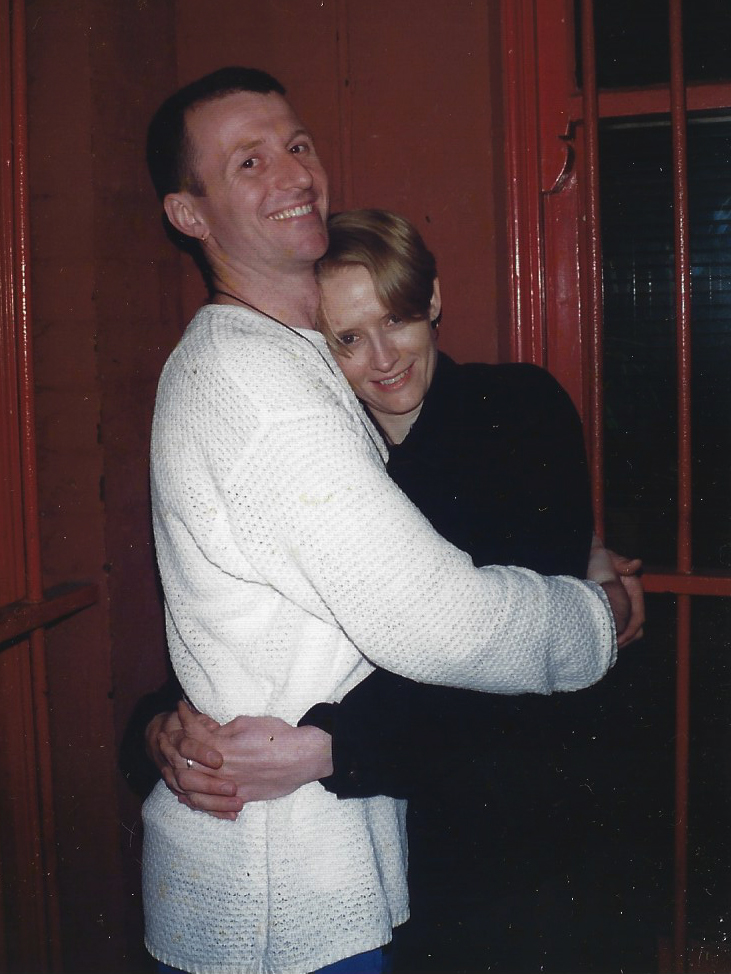
An email interview with Kathy Naunton (October 2023)
VOLT 2023: Tell me a little about your background in the industry. How did you get started, and how did you start with Volition?
Kathy Naunton: From 1984 onwards I was fortunate to work in nearly all Sydney’s major recording studios, working my way up from coffee and pizza runner, to assistant engineer, then in-house engineer and finally going freelance around 1992.
I had met Robert Racic on a session at Albert’s Studio’s where I was by then one of the in-house engineers (staff engineers) and I was kind of thrown together with Robert on a session. He was a bit annoyed that he wasn’t able to use his regular engineer and let me know by being aloof and quite stand offish … the rest is history.
By this point he had already been creating extended mixes by using 1/4 inch tape – seems unthinkable now doesn’t it? But anyway this was his own creative way of making extended versions of songs he liked so he could play them in the inner city club scene where he deejayed regularly.
Then computers and music software arrived and digital technology exploded. Samplers, drum machines, digital recording, DAT machines, digital multitrack recorders were now in use and we would work insane hours in the studio to get a remix finished. Those were the days where you really did have to finish before the next session started at 9am the following morning even if you were still packing up at 8:55am!
Around this time Robert and I started working on Volition projects together and separately – Boxcar, Severed Heads, Sexing The Cherry, Jo Beth Taylor, Beatfish (Martin Plaza from Mental as Anything and James Freud from the Models) – to name a few. But we were disillusioned or frustrated, or both, by the mastering options in Sydney. We had the opportunity to have one project mastered in New York and Robert came back with masters that sounded fat, not harsh, big, dynamic, in other words awesome, and as we imagined they might sound. The only trouble was we couldn’t keep expecting record labels to pay for NY mastering so … again, the rest is history.
VOLT 2023: To me Volition releases have a very distinct sound, specifically those where you and Robert worked together. I’m not an audio expert by any means and if I use words like clean, punchy, fat, can you elaborate on that?
Kathy Naunton: Well that’s very nice of you to say! We didn’t think of ourselves as mastering engineers at all – at first – but we knew the sound we wanted to create. So we began experimenting.
My criteria as engineer was the gear had to be clean, which in simple audio terms means having massive signal to noise ratio which translates as no matter how quiet the musical signal is there is little to no inherent noise or hiss. But our choices in gear also meant we were looking for stuff that had personality as well. So initially we borrowed or hired whatever we could find and started working out how to create the sound that we liked.
Then a weird thing happened, word spread. Other inner city artists similarly driven by the creative madness and seeking “a sound” would reach out to us to see if we could master their mixes. So around this time we were simply following the light and not really even aware we were part of something important, something that was going to be talked about in decades to come.
And so from these very humble beginnings we were busier than ever producing, mixing and mastering music for a wide variety of artists but of course the Volition label was a huge part of our work and Andrew Penhallow was similarly on the path of finding the future of electronic music. We were very fortunate that our paths met and synced.
VOLT 2023: Can you describe what your and Robert’s aims were when it came to production, mixing and engineering? What was the typical process, if there was one?
Kathy Naunton: Well, one underpinning aspect of Robert’s productions was that he didn’t actually have a lot of gear. I came to understand from observing many artists during my many years in the music industry that there is almost always a direct correlation between the amount of gear one has to the amount of creativity and talent one has. Almost without fail. So, armed with a couple of samplers and a couple of drum machines, Robert would create wonderfully funky beds that not only felt good but sounded good.
We were both sticklers for getting the feel right, sometimes deliberating at 3am with our eyes hanging out as to whether the kick sounded better advanced by 1ms or back where it was. These were the details that were important in getting something to magically feel right, feel funky or just… meh!
In the mid 90’s we still had to hire studios to mix our productions unlike today where everything would be done in your home studio. So we would usually book a studio with an SSL console which had recall options just in case we had to return at some point to make a small change. Again, it seems crazy now but that was then. And we inevitably pulled all-nighters due to budget constraints. If we were recording vocals or other musicians we would be each others’ sounding board for whether a take was worth keeping. Limited by 24 tracks was a good thing!
Now we have endless hard drive space but then we essentially had to make tough decisions on the spot. A good thing I think! Mastering would come much later when objectivity and a sense of perspective returned. This is such an important aspect and why most artists cannot master their own stuff…they’re just too close and can’t hear it objectively anymore.
VOLT 2023: I didn’t ever meet Robert but have a lot of respect for his work, and in a way he introduced me to New Order. I’ve always loved his remix of New Order’s “Paradise” that ended up included on the Australian 12″ remix single of “True Faith”. How do you remember Robert? You two must have been quite the formidable team.
Kathy Naunton: I remember Robert as a perfectionist, a true ground breaking innovator, childlike in some ways, though I’m convinced that true creatives have to retain the childlike wonder to “play” and make mistakes then suddenly realise you like the mistake. You know what I mean?
Robert and I became not only good friends and colleagues but almost like siblings. We would sometimes finish each others’ sentences or be able to read each others’ minds just by a look. He had a wicked sense of humour, was cheeky, quite an exhibitionist, and was a loyal and kind friend.
He has to be one of the most important people to have passed through my life because I honestly would never have thought of entering the world of mastering if it hadn’t been for him.
VOLT 2023: You’re still working in the industry, and you were telling me that recently a musician wanted you to do their engineering based on what they’d heard of your Volition-era work. That must make you feel really good! What would you like your legacy to be, particularly as it relates to Volition?
Kathy Naunton: Yes that’s true and yes it does make me feel good. I think it’s testament though to Volition founder Andrew Penhallow’s foresight, vision and belief in the artists and their music, borne by the fact that people such as yourself and new artists are listening to those productions and being inspired decades later.
As far as my legacy goes, I really don’t ever think of such things to be honest. But I guess as someone who no doubt has a touch of imposter syndrome it’s validating to hear that others are interested.
The design
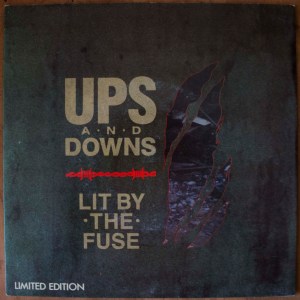
Volition’s design really stood out amongst Australian independent releases of the era and it changed with the times, reflecting the cheaper and more accessible technology of the 90s and a new sophistication that flowed from that change.
Prior to founding GAP, then Volition and Factory Australasia, Andrew Penhallow‘s working background had been as a graphic designer.
“Andrew’s attention to detail was legendary, and this extended across music, graphics, merchandising, printing and so on. He demanded quality in all those areas, and drove those who were either not used to such demands, and/or didn’t care, to distraction. He made printers perform feats they didn’t think possible, pushed graphic designers, etcetera, to greater levels, all in the service of quality and music culture.
I really appreciate you including the design and graphic element in the Volition story. It was incredibly important to Andrew and so incredibly important to the culture of Volition.” [Virginia M. Moncrieff, Andrew’s partner]
“It was a pretty natural fit for us and Andy’s artwork. Even from our earliest releases, you can see we loved a combination of the Factory records art style… dark, often austere imagery… and 4AD records… more colourful, obscure imagery… to accompany the music, so when we had the opportunity to work with Andy we jumped at it.
We first met Andy at the Sydney Trade Union Club on one of our early shows. He was there with The Go-Betweens’ manager, Clive Miller, who not long after that became our band manager. So it was their friendship and business relationship… they shared an office in East Sydney… that led to us working with Andy, and later signing to Volition.
We would hook up with great local artists and photographers like Peter Howard and then give some images to Andy and he would apply his creative touch. His design for Sleepless was a case in point. We gave him an interesting if obscure looking photo from Peter’s collection and he turned it onto a work of art.” [Darren Atkinson of Ups And Downs and Big Heavy Stuff]
[… more to come …]
ReplyForward

